
Why Professional Tattoo Artists Choose Black Nitrile Gloves (And Why It Matters)
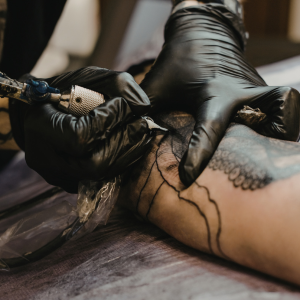
Tattooing is an art form, but it is also a procedure that involves direct contact with blood and broken skin. Because of this, professional tattoo studios must operate with strict hygiene and infection control standards. One of the most visible and essential parts of this hygiene protocol is the use of disposable gloves.
Across the tattoo industry, black nitrile gloves have become the preferred choice for professional artists. They provide strong barrier protection, reduce the risk of allergic reactions, and help maintain a clean, professional appearance during tattoo procedures.
This guide explores why black nitrile gloves are widely used in modern tattoo studios, how they compare to other glove materials, and what tattoo artists should look for when choosing the best gloves for tattooing. Understanding glove materials, thickness ratings, and infection control standards can help studios maintain safe practices while delivering the highest level of professionalism to clients.
Why Gloves Are Non-Negotiable in Tattooing
Tattooing involves repeatedly puncturing the skin with needles that deposit ink into the dermis. This process creates direct exposure to blood and bodily fluids, which means tattoo artists must follow strict hygiene protocols to prevent infection and cross‑contamination.
Disposable gloves create a protective barrier between the artist and the client. They help prevent the transmission of bacteria, viruses, and other pathogens that can be present in blood or on contaminated surfaces.
Health authorities such as the World Health Organization emphasise the importance of proper protective equipment during procedures that involve skin penetration. Gloves are considered a fundamental component of infection prevention and control in any environment where exposure to blood may occur.
For tattoo artists, gloves protect both sides of the equation:
-
They protect the client from bacteria on the artist’s hands.
-
They protect the artist from bloodborne pathogens.
Because tattoo procedures can last for several hours, the quality and durability of the gloves used are extremely important.
Latex vs Nitrile: What’s Safer?
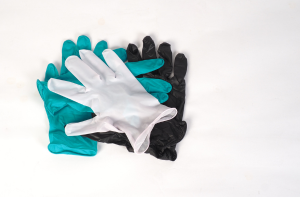
For many years, latex gloves were the most commonly used disposable gloves across medical and personal service industries. However, latex allergies have become increasingly recognised, leading many industries to transition to nitrile gloves instead.
Latex Gloves
Latex gloves are made from natural rubber and provide good flexibility and tactile sensitivity. However, they come with several limitations:
-
Latex allergies are relatively common
-
Latex proteins can trigger skin irritation or severe allergic reactions
-
Latex gloves are less resistant to certain chemicals and inks
Because tattoo studios work closely with skin and bodily fluids, avoiding potential allergens is a priority.
Nitrile Gloves
Nitrile gloves are made from synthetic rubber and offer several advantages over latex:
-
Latex‑free (reduced allergy risk)
-
Higher puncture resistance
-
Strong chemical resistance
-
Excellent durability
According to occupational health research, nitrile gloves provide superior protection against punctures compared with many latex alternatives. This makes them particularly suitable for environments where sharp instruments such as tattoo needles are used.
For these reasons, nitrile gloves have become the industry standard in most modern tattoo studios. Global health authorities emphasise the importance of appropriate personal protective equipment when performing procedures that involve exposure to blood or bodily fluids. The World Health Organization highlights gloves as a critical component of infection prevention and control, helping reduce the transmission of microorganisms between healthcare workers, tools, and patients. In environments such as tattoo studios where skin penetration occurs, using high‑quality disposable gloves is considered an essential protective measure.
Why Black Gloves Are the Industry Standard
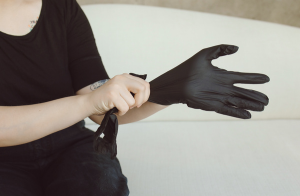
While nitrile gloves are available in multiple colours, black disposable gloves are by far the most popular choice in tattoo studios.
There are several practical and professional reasons for this preference.
Visual Cleanliness
Tattoo ink can easily stain light-coloured gloves, creating a messy appearance during procedures. Black gloves hide ink stains much better than white or blue gloves, helping the artist maintain a professional look throughout the session.
Improved Visibility
Black gloves can improve visual contrast when working with coloured inks, making it easier for artists to see details during tattooing.
Professional Studio Aesthetic
Many tattoo studios prioritise a clean and modern aesthetic. Black gloves contribute to a sleek, professional look that aligns with the visual branding of many studios.
Perception of Hygiene
Clients often associate black gloves with professional tattoo environments because they have become so widely used across the industry.
Because of these factors, black nitrile disposable gloves are now considered the standard glove choice for many professional tattoo artists.
Glove Thickness: Understanding 3mil vs 5mil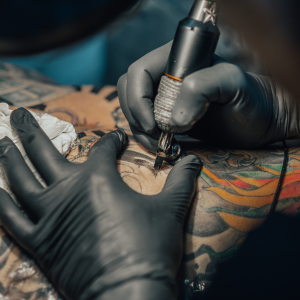
When selecting gloves for tattooing, thickness is an important factor. Glove thickness is usually measured in mils (one mil equals one‑thousandth of an inch).
3mil Gloves
3mil gloves are lightweight and provide excellent dexterity. They allow tattoo artists to maintain a strong sense of touch when working on detailed designs.
However, thinner gloves may be more susceptible to tearing during long procedures.
5mil Gloves
5mil gloves are thicker and provide increased durability and puncture resistance. This makes them a popular choice for tattoo studios where extra protection is required.
Many professional tattoo artists prefer gloves between 4mil and 5mil because they provide a balance between dexterity and durability.
Choosing the right glove thickness helps ensure both comfort and protection during extended tattoo sessions.
Chemical and Ink Resistance
Tattoo artists frequently work with cleaning solutions, disinfectants, and pigments that may contain solvents or alcohol-based ingredients.
Nitrile gloves offer strong resistance to many chemicals, which makes them suitable for environments where disinfectants and inks are regularly handled.
This resistance helps prevent glove degradation during tattoo procedures, reducing the likelihood of tears or leaks that could compromise hygiene.
Because tattoo studios rely heavily on disinfectants and cleaning products to maintain sterile environments, chemical resistance is an important feature when selecting disposable gloves.
Reducing Cross‑Contamination with Proper Glove Use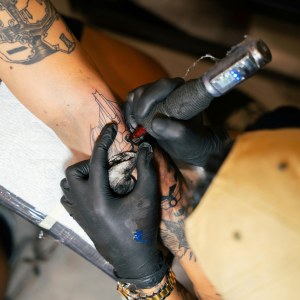
Even the best gloves cannot protect against infection if they are used incorrectly. Tattoo artists must follow strict glove protocols to prevent cross‑contamination within the studio.
Cross‑contamination occurs when bacteria or pathogens are transferred from one surface or person to another. In tattoo studios, this can happen if artists touch equipment, phones, or other surfaces while wearing contaminated gloves.
To reduce cross‑contamination risks, artists should:
-
Change gloves between every client
-
Replace gloves immediately if they tear
-
Remove gloves after touching non‑sterile surfaces
-
Perform hand hygiene before putting on new gloves
Disposable barrier films and surface disinfectants can further reduce contamination risks by protecting high‑touch equipment.
Following proper glove protocols is a critical part of tattoo studio infection control.
How Often Should Tattoo Artists Change Gloves?
Changing gloves regularly is essential for maintaining hygiene standards.
Professional tattoo artists typically change gloves:
-
Before starting each tattoo
-
After touching non‑sterile surfaces
-
When switching tasks
-
When gloves become contaminated with ink or blood
-
If gloves tear or become damaged
During long tattoo sessions, artists may change gloves multiple times to maintain a sterile working environment.
Proper glove removal techniques are also important. Gloves should be removed carefully to avoid transferring contaminants onto the skin.
Allergies and Skin Sensitivities in Tattoo Studios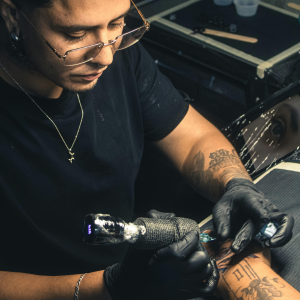
Latex allergies are a significant reason why many industries have transitioned to nitrile gloves.
Some individuals experience allergic reactions when exposed to latex proteins. These reactions can range from mild skin irritation to more serious symptoms such as swelling or breathing difficulties.
Because tattoo studios work directly with clients' skin, reducing the risk of allergic reactions is essential.
Nitrile gloves are latex‑free and are widely considered a safer alternative for environments where repeated skin contact occurs.
Using nitrile gloves also demonstrates that a studio takes client safety seriously.
Barrier Protection and Infection Control Standards
Disposable gloves play a key role in infection prevention and control standards across healthcare and personal service industries.
Barrier protection refers to the ability of gloves to prevent microorganisms from passing through the material.
High‑quality nitrile gloves provide strong barrier protection against bacteria and viruses when used correctly.
Studies on glove materials used in healthcare environments have shown that nitrile gloves offer reliable puncture resistance and barrier protection, making them suitable for procedures involving exposure to blood.
For tattoo studios, choosing high‑quality disposable gloves is an essential step in maintaining professional hygiene standards.
Bulk Buying Disposable Gloves for Tattoo Studios
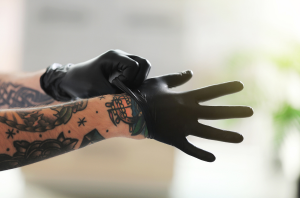
Tattoo studios go through a large number of disposable gloves each day. Because gloves must be changed frequently, keeping an adequate supply is critical.
Many studios choose to purchase gloves in bulk to ensure they never run out of essential hygiene supplies.
Benefits of bulk purchasing include:
-
Lower cost per box
-
Consistent supply during busy periods
-
Reduced risk of hygiene shortcuts due to shortages
Reliable hygiene suppliers such as Insinc provide professional‑grade disposable gloves and other infection control products that help tattoo studios maintain consistent hygiene standards.
Choosing the Best Gloves for Tattooing

When selecting disposable gloves for a tattoo studio, several factors should be considered:
Material – Nitrile gloves provide strong durability and allergy protection.
Colour – Black gloves help maintain a professional appearance during tattoo procedures.
Thickness – Gloves between 4mil and 5mil offer a good balance between protection and dexterity.
Powder‑free design – Powder‑free gloves reduce contamination risks.
Comfort and fit – Gloves should fit securely without restricting hand movement.
Choosing high‑quality gloves ensures tattoo artists can work safely and comfortably while maintaining strict hygiene standards.
Frequently Asked Questions
Why do tattoo artists prefer black nitrile gloves?
Black nitrile gloves are widely preferred because they are durable, latex‑free, and resistant to chemicals commonly used in tattoo studios. Their darker colour also helps hide ink stains during procedures, maintaining a cleaner and more professional appearance throughout a tattoo session.
Are nitrile gloves better than latex gloves for tattooing?
Yes. Nitrile gloves are generally considered safer for tattoo studios because they are latex‑free, reducing the risk of allergic reactions for both artists and clients. They also offer stronger puncture resistance and better chemical resistance compared with many latex alternatives.
What thickness gloves are best for tattoo artists?
Most professional tattoo artists prefer gloves between 4mil and 5mil thickness. These gloves provide a balance between tactile sensitivity and durability, allowing artists to maintain precision while still having reliable protection against punctures and tears.
How often should tattoo artists change their gloves?
Gloves should be changed before every new client and anytime contamination may occur. This includes touching non‑sterile surfaces, switching tasks, or if gloves become torn or heavily contaminated with ink or blood. Changing gloves regularly is essential for preventing cross‑contamination.
Are powder‑free gloves important for tattoo studios?
Yes. Powder‑free gloves are recommended because glove powder can contaminate equipment, ink, or open skin. Powder‑free nitrile gloves help maintain cleaner working conditions and reduce the risk of irritation.
Conclusion
Black nitrile gloves have become the preferred choice for professional tattoo artists because they offer durability, chemical resistance, and reliable barrier protection.
Their latex‑free design reduces the risk of allergic reactions, while their darker colour helps maintain a clean and professional appearance during tattoo procedures.
When combined with proper infection control protocols, high‑quality disposable gloves play an essential role in protecting both tattoo artists and their clients.
For tattoo studios in New Zealand, maintaining a reliable supply of professional‑grade nitrile gloves is a simple but critical step in maintaining hygiene standards and delivering safe, professional tattoo services.
Find Professional Nitrile Gloves for Your Tattoo Studio
If you run a tattoo studio, choosing the right disposable gloves is one of the most important hygiene decisions you make every day.
Insinc supplies high‑quality black nitrile disposable gloves designed for professional workplaces, including tattoo studios that require strong durability, chemical resistance, and reliable barrier protection.
Explore Insinc’s range of powder‑free black nitrile gloves to help maintain hygiene standards, reduce cross‑contamination risks, and keep your studio fully stocked with professional‑grade protective equipment.
https://www.insinc.co.nz/nitrile-disposable-gloves.html
Posted: Friday 27 February 2026